Pièce 1 once d'or Épreuve numismatique inverse Libertad mexicaine 2024 | Monnaie mexicaine
Related products
The Mexican Libertad gold coin is popular among investors looking to diversify their holdings with a unique and well-designed coin. Diversify your holdings with the addition of a 1 oz 2024 Mexican Libertad Reverse Proof Gold Coin today!
COIN HIGHLIGHTS
- Ships individually in protective packaging
- Consisting of 1 oz 999 Fine Gold
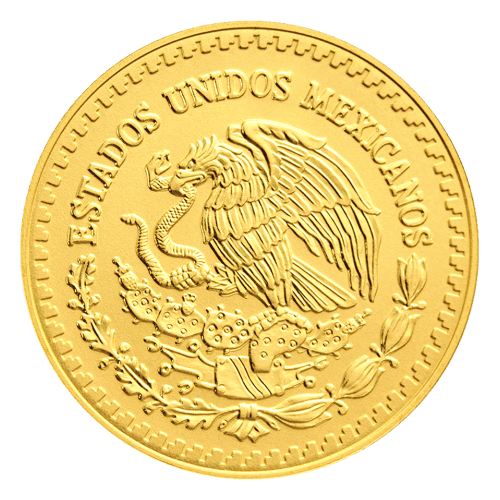
- Obverse: Features a relief of Mexico's national shield, surrounded by nine iterations of Mexico's various national coats of arms as well as a laurel wreath along with the inscription "ESTADOS UNIDOS MEXICANOS"
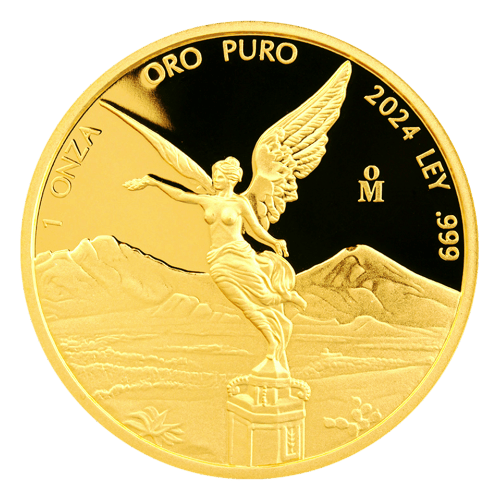
- Reverse: Features a sculptural relief design of Mexico City's Angel of Independence, the winged victory, shown against a background consisting of two Mexican volcanoes: the Popocatépetl and the Iztaccihuatl, the Mexican Mint stamp, and the metal weight and purity
- Reverse Proof Finish
The Mexican Libertad gold bullion coin is popular among investors looking to diversify their holdings with a unique and well-designed coin. The Mexican Libertads consist of silver and gold coins minted in extremely low quantities compared to other bullion coins, which increases both demand and premiums. In addition to their low mintage, the attractive design of the winged victory statue adds a collectability aspect that can be appreciated by numismatists as well.
The obverse feature is the monument of independence: Angel de la Independencia, the Mexican independence victory column holding the winged victory statue displayed prominently in the heart of Mexico City in a sculptural relief design. The monument pays homage to the Roman Goddess of Victory, or Victoria, with no attention to detail left out. In the background, the coin highlights two critical symbols of Mexican history: Popocatépetl and Iztaccíhuatl, the Nation's second and third largest volcanoes, respectively.
The two volcanic structures are prominent in Aztec mythology and Mexico's history. Popocatépetl was a fearsome warrior who was promised the Emperor's daughter, Iztaccíhuatl, to increase the warrior's ferocity and resolve upon completing an ensuing battle. Assuming he would not return, the Emperor told his daughter that Popocatépetl had died in the war, causing Iztaccíhuatl to perish from grief. Following his triumphant return, the fearless warrior encountered his deceased bride and laid her to rest. Her form remains as Iztaccíhuatl mountain, or La Mujer Dormida, "The Sleeping Woman." The legend of the coin's reverse side reveals its weight, purity, and year of issue, written in Spanish. To this day, Popocatépetl remains an active Volcano, while Iztaccíhuatl does not.
At the center of the reverse, a Golden Eagle is depicted atop a prickly pear cactus as it devours a snake. The encircling images are the various phases of the Mexican coat of arms in a clockwise direction and the inscription "Estados Unidos Mexicanos." The reverse also pays tribute to the Aztec heritage of the Nation. It was prophesied that the ancient civilization would settle around where the image was witnessed as reality. Mexico City is the land where this prophecy is said to have materialized.
ABOUT THE MEXICAN MINT
Established in 1535, La Casa de Moneda de Mexico, or The Mexican Mint, is the oldest Mint in the Americas and one of the world's oldest mints, with the Mexican Gold Peso being an enduring and highly collected relic of the past. With an operational life of over 400 years, it is safe to say that Mexico's national Mint has a well-established and well-garnered reputation, working alongside the esteemed Banco de México (the Mexican Bank) to mint circulating money for the Mexican people. The Libertad bullion gold and silver coins contribute to the Mint's success.
