Pièce 1/20 once d'or La curieuse martre 2023 | Monnaie royale canadienne
Related products
Shiny and tiny—this little gold coin and its baby marten will capture your heart.
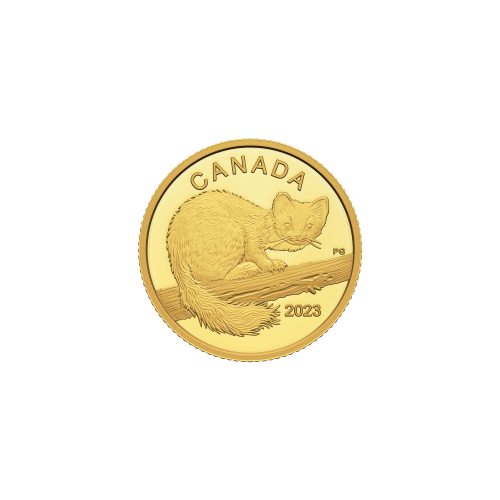
Captured on the Royal Canadian Mint's smallest (14 mm) blank and in 99.99% pure gold, the baby marten (or kit) is furry, energetic, and oh so adorable! This cute resident of Canada’s boreal forests will grow up to be a solitary hunter and an agile forager that deftly moves among the trees in search of berries, nuts, insects and small mammals. But before reaching maturity, a marten kit is reliant on its mother until the fourth month—that’s when it is finally ready to make its first foray out of the den and into the forest, as seen on this coin.
Struck on a 1/20 oz. gold blank for greater affordability, this baby animal portrait is crafted in 99.99% pure gold.
COIN HIGHLIGHTS
- Smallest gold. Captured on the Royal Canadian Mint's smallest gold blank (14 mm), this coin offers a glimpse of life in the Canadian wilderness, where even the tiniest creature plays a big part in our natural heritage.
- High appeal. Animal lovers will love the coin’s wildlife portrait. This pure gold coin is also an affordable option for anyone looking to add pure gold to their collection.
- Low mintage. Only 3,000 coins available worldwide.
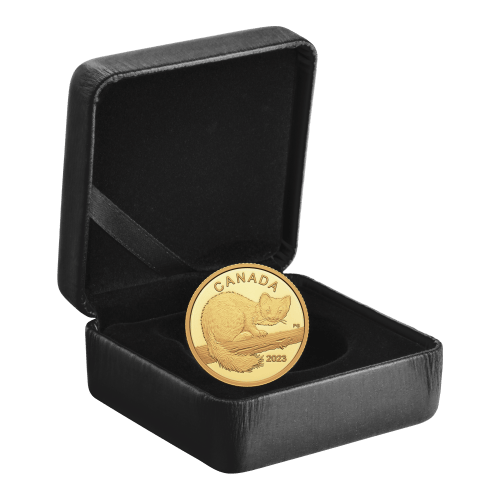
- Includes serialized certificate. The Royal Canadian Mint certifies all of its collector coins.
AFFORDABLY SIZED, PRECISELY CRAFTED
While the coin’s 14 mm diameter makes it slightly smaller than a 10-cent piece, you’ll find an incredible wealth of engraved details on its reverse.
A CAPTIVATING CANADIAN SPECIES
The bushy-tailed marten (also known as the pine marten) isn’t often featured on the Royal Canadian Mint's coins but is found throughout Canada, where it resides in the boreal forests that stretch from east to west and into the north.
DID YOU KNOW?
- A member of the Mustelidae family that includes weasels, wolverines and skunks, an adult marten (or pine marten) is roughly the size of a housecat, but with a slender body and shorter legs. A sub-species, the Newfoundland marten, is only found in the province of Newfoundland and Labrador.
- The baby marten depicted on the coin is already a few months old. After finding a suitable tree hollow or abandoned den, the mother gives birth to two to four babies in March/April. Each newborn weighs just 30 grams but they grow quickly! The mother nurses her young until early summer, and the juveniles are on their own by the fall.
- The marten’s silky coat has traditionally commanded a high price in the fur industry, where it is sometimes marketed as Canadian sable.
DESIGN & ARTIST
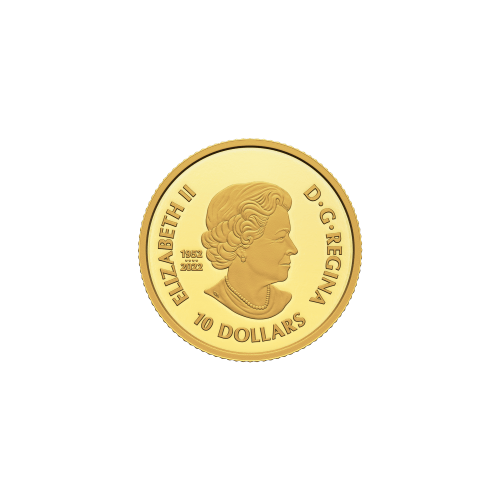
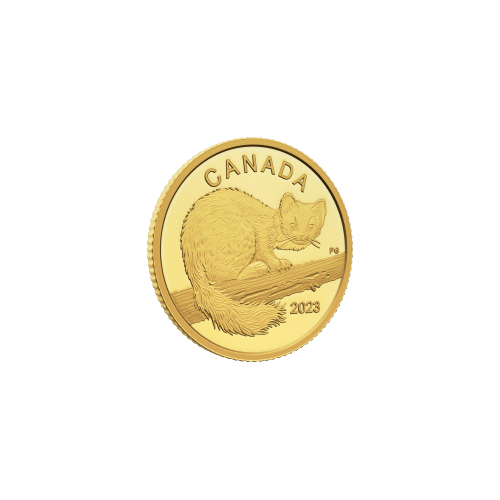
Designed by Canadian wildlife artist Pierre Girard, the coin’s reverse features a charming portrait of a marten kit. The young animal is perched on the branch of a tree with its bushy tail hanging down, as it turns to face the viewer. The obverse features the effigy of Queen Elizabeth II by Susanna Blunt. The obverse also bears a special marking that includes four pearls symbolizing the four effigies that have graced Canadian coins and the double date of her reign.
ABOUT THE ROYAL CANADIAN MINT
The Royal Canadian Mint is known as one of the most reputable mints in the world. The Ottawa Branch of the Royal Mint opened in 1908 and was renamed The Royal Canadian Mint in 1931 when control was transferred to the Canadian government. The Royal Canadian Mint is renowned for producing some of the highest quality and purity of gold and silver bullion coins and bars in the world. Their high standards for excellence and quality allowed them to be the first refinery to manufacture 9999 fine gold bullion coins in 1982, as well as the first to reach 99999 fine gold purity in 1998.
