Pièce 2 onces d'argent vieilli L'appel du loup gravure en surélévation 2024 | Monnaie royale canadienne


Related products
We’re lifting 2D art to 3D with the help of our new Lifted Engraving technology.
The image of a howling wolf is a timeless one that evokes an array of feelings, from admiration of the untamed to fear of the unknown, as its mournful call carries through the moonlit night and pierces the very soul…
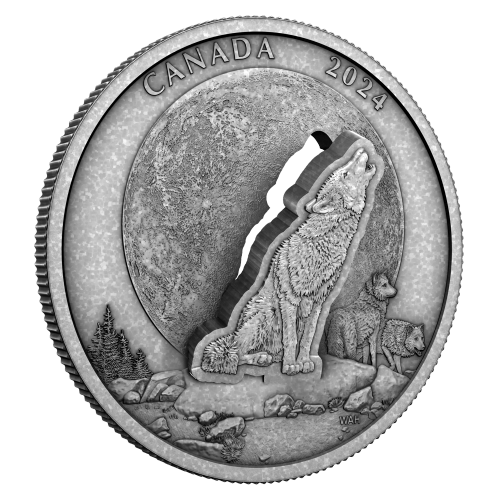
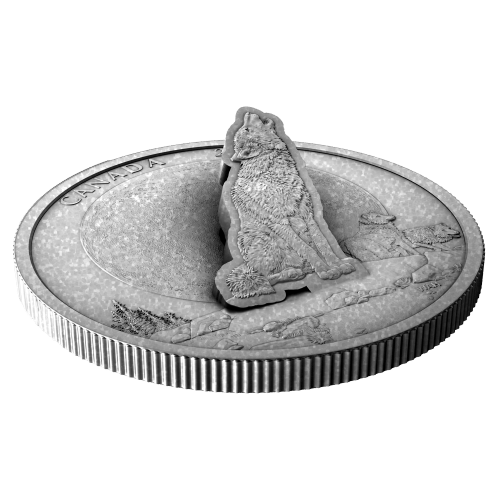
First unveiled on the 2020 From the R&D Lab: Flying Loon prototype, Lifted Engraving technology is a ground-breaking innovation that turns a 2D design into 3D art, by lifting (and holding) the focal point above the rest of the engraved coin surface. This 99.99% pure silver coin is the first to use this new technology to its full potential, and its howling wolf was made possible by a proprietary process that allows for the crepuscular hunter to be lifted out of the coin to form a foreground layer, while behind it, the full moon sets the tone for a spellbinding scene.
The innovation continues: Own an elevated work of 3D art.
COIN HIGHLIGHTS
- Craftsmanship meets scarcity. Mintage is limited to 2,500 coins available worldwide, and since the 2020 dated prototype had a low mintage of just 425, only a small group of collectors can say they own an example of this new Lifted Engraving technology.
- Unique engineering. The howling wolf isn’t an embellishment—it is all crafted from a single 99.99% pure silver blank using the same minting process as a standard coin. Using a new type of die and deliberately cutting into the coin, the key relief is separated from the rest of the design using proprietary methods that cut-out and bend the field. The key relief is now in position to come out of the coin as a foreground layer.
- An engineering feat. Each coin is the product of an intensive production process involving a specific sequence of steps. This is craftsmanship meets innovation, made possible through the collaborative efforts of Mint engineers and engravers.
- Includes serialized certificate. The Royal Canadian Mint certifies all of its collector coins.
- No GST/HST.
PACKAGING
Your coin is specially encapsulated and presented in a black Royal Canadian Mint-branded clamshell with a black beauty box.
UNLOCKING A TECHNOLOGY'S FULL POTENTIAL
This 99.99% pure silver coin with antique finish is the first to use Lifted Engraving technology to its full potential: the ground-breaking innovation made its world debut on the 2020 From the R&D Lab: Flying Loon prototype.
FROM 2D TO 3D
The technology allows for a more dimensional rendering of an already captivating night scene—perched on a cliff’s edge, the elevated wolf truly stands out against the full moon.
DID YOU KNOW?
Each month’s full moon goes by a different name, such as the Hunter’s Moon in October. January’s full moon is known as the Wolf Moon because it is popularly associated with wolves howling on a midwinter night—whether those cries are a hunting signal, an assertion of territorial boundaries, or a social call-out to other pack members. A wolf doesn’t simply howl at the moon: by lifting its head towards the sky, it projects its call so the sound carries farther.
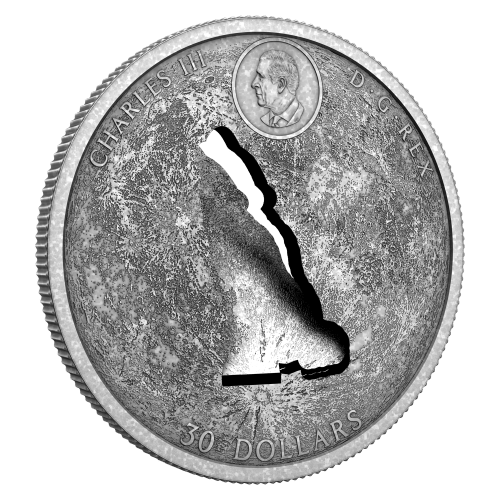
The reverse design by artist W. Allan Hancock depicts three members of a wolf (Canis lupus) pack on a moonlit night: two of the wolves are focused on something in the distance while the third one is shown howling at the cliff’s edge, backed by the full moon. Enhanced with antique finish and Lifted Engraving technology, the shape of the howling wolf has been smoothly cut into the coin and raised above the coin’s surface to add depth to the wildlife scene. The cutaway creates a wolf silhouette within the full moon engraved on the obverse, which features an inset with the effigy of His Majesty King Charles III by Canadian artist Steven Rosati.
ABOUT THE ROYAL CANADIAN MINT
The Royal Canadian Mint is known as one of the most reputable mints in the world. The Ottawa Branch of the Royal Mint opened in 1908 and was renamed The Royal Canadian Mint in 1931 when control was transferred to the Canadian government. Their high standards for excellence and quality allowed them to be the first refinery to manufacture 9999 fine gold bullion coins in 1982, as well as the first to reach 99999 fine gold purity in 1998.
